While it is best to preserve natural teeth, many reasons can necessitate tooth extraction. Sometimes a filling or crown is not enough to restore a tooth. The American Dental Association suggests the extraction of teeth that have suffered severe trauma, have extreme tooth decay or disease, or are crowding the surrounding teeth. It is also normal for patients to have an extraction or two before orthodontic treatment.
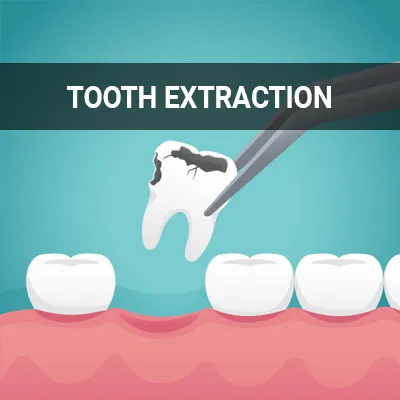
Many tooth extractions are relatively simple and performed in-office. For teeth that are visible about the gum line, we will numb the extraction site and remove the tooth with forceps. Broken or impacted teeth require a more involved procedure.

According to the National Institute of Dental and Craniofacial Research, gum disease is the most common cause of tooth loss in adults. Gum disease occurs when bacteria get below the gum line and causes infections. Without treatment, oral bacterial leads to gum recession, damage to the jawbone, loose teeth, and even tooth loss.
Research has also shown chronic dental infections can cause inflammation that contributes to cardiovascular disease, stroke, and many other related diseases. While a root canal can often save a tooth from decay, sometimes a tooth is beyond saving due to lost structure and stability. Tooth extraction can prevent damaging decay and infection from spreading.
“Tooth extraction can prevent damaging decay and infection from spreading.”
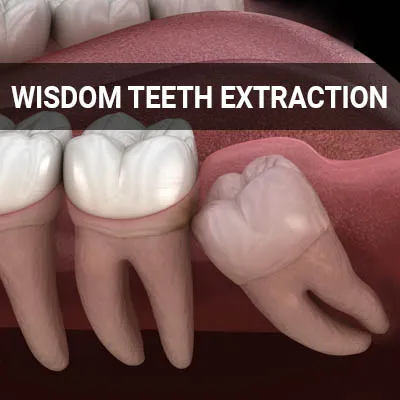
In some cases, it is beneficial to have crowded or impacted teeth extracted. Impacted wisdom teeth do not have enough room to grow. Extraction can prevent pain, infection, and other dental problems. While not all wisdom teeth need removal, it is necessary once they start causing problems. In some cases, wisdom teeth do not fully break through the gums and can cause crowding issues. A partially erupted wisdom tooth is especially susceptible to cavities.
Patients may also need teeth extracted before receiving braces. Orthodontics involves the process of properly aligning the teeth, which may be tough without enough room. Crowded teeth increase a patient’s risk of developing gum disease and cavities. Extracting teeth can relieve crowding and impacted teeth.
“Extraction can prevent pain, infection, and other dental problems.”
Typically, the first option to restore a damaged tooth is a crown or filling. If the damage is too severe, trying to save a tooth may put oral health at further risk. A filling may put the tooth at risk for shattering, while a tooth may not be strong enough to support a crown. Root canals are also not possible when there is too much tooth damage.
Each tooth has a limit to how many times it can be worked on before it starts to fail. Redoing a crown or root canal only buys so much time. After several fillings, crowns, and root canals, there will not be much of the tooth left to save. At that point, tooth extraction is the best option to maintain oral health.
“If the damage is too severe, trying to save a tooth may put oral health at further risk.”
Teeth are tough but not indestructible. Traumatic dental injuries can occur from a sports injury, car accident, or even a simple slip and fall. While many injuries are minor, if the tooth becomes severely damaged to the point where restoration is not possible, an extraction will be necessary.
After sustaining tooth trauma, patients should schedule an appointment quickly to improve their outcomes. Our team can look for signs of additional damage that may not be immediately obvious. Severely fractured teeth can be very loose and unable to be restored with dental work, thus making tooth extraction necessary. Patients should take any dental trauma seriously, even if it seems mild.
“While many injuries are minor, if the tooth becomes severely damaged to the point where restoration is not possible, an extraction will be necessary.”
Check out what others are saying about our dental services on Yelp:
Yes, you can still travel safely with sleep apnea. For best results, you should take your CPAP machine and other dental appliances with you—particularly on any trips that will take longer than one or two days.
There is a direct correlation between sleep apnea and other health issues, like high blood pressure. Constantly waking up in the middle of the night puts stress on your body, causing the hormone systems to work overtime and increase blood pressure. The low oxygen and stress associated with sleep apnea are also related to heart disease.
No. Snoring is very common. However, snoring that wakes you up in the middle of the night can be a sign of sleep apnea. Snoring associated with sleep apnea also tends to be deeper, louder, and more consistent. It may also be interrupted with gasps, choking, or pauses. Patients should see a doctor if they experience a combination of any of these symptoms.
The American Sleep Apnea Association estimates that over 20 million Americans suffer from sleep apnea. Furthermore, they estimate that as much as 80 percent of moderate and severe cases of obstructive sleep apnea are undiagnosed.
Unfortunately, no. However, there are many different ways you can minimize and manage the symptoms of sleep apnea.
After tooth extraction, it typically takes a few days to recover. Patients can take over-the-counter pain medication to minimize pain and discomfort. We recommend applying an ice pack to the affected area, stop smoking, and eat soft foods.
Typically, a patient receives local anesthetics during the procedure to keep them comfortable. It is normal to feel some pressure while the extraction is taking place, but it should not hurt. We may recommend some over-the-counter pain medications to minimize pain.
We will give patients detailed care instructions to follow at home. It is normal to feel some discomfort once the anesthesia wears off. There may also be some swelling and slight bleeding for up to a day after the extraction.
Patients should have a consultation to determine the best treatment for their teeth. Extraction may be necessary for a tooth that can no longer handle any additional restorative procedures, has severe decay, or is overcrowding the rest of the teeth. An orthodontics treatment plan may also involve the extraction of teeth.
Smoking after a tooth extraction is prohibited to prevent complications. Smoking can also dislodge the formed blood clot and lead to a painful dry socket and increase the risk of infection. The blood clot plays an essential role in the healing of the wound.
By visiting us as soon as possible, our team can help get you the professional treatment you need. Instead of waiting around and allowing the symptoms to get worse, we can provide you with treatment options.


With Invisalign® treatment, the patient will receive a series of aligner trays and swap out each one for the next one in the series every two weeks in order to gradually straighten the teeth.
The blue compliance indicator is a small blue dot on the aligners that will fade from blue to clear in order to indicate if the patient is wearing the aligner for the proper amount of time and where the patient is in the Invisalign® process.
ClinCheck® software allows professionals to map out the straightening process the patient’s teeth will go through with Invisalign® in great detail.
The gum line is the line in the mouth where the teeth and gums meet. If a patient struggles with gum recession, then the gum tissue around the teeth may begin to wear away.
Incisal ridges are the portion of the crown of the tooth that makes up the incisal portion and can be a direct cause of overbite if they are extended too far.
An iTero Element® scanner allows professionals to create a 3D image of the patient’s teeth in minutes and predict what it will take to move the teeth into proper alignment.
Malocclusion is the condition in which the upper and lower teeth do not meet properly when the bite is closed. Conditions of malocclusion can include overbite, underbite, crossbite and open bite; all of which are treatable with Invisalign®.
An overbite is a type of malocclusion that occurs when the upper teeth jut out over the lower teeth, covering them and causing other issues.
Polyurethane Resin is a USP Class VI medical grade, high molecular weight compound that makes up the Invisalign® aligners.
SmartForce attachments are small attachments that professionals place on the patient’s teeth before placing aligners to help move the teeth.
Smart Track® material is in Invisalign® aligners to increase comfort, improve control of movement, increases the speed of treatment and applies a gentle force to the teeth over time.
Smile-Scan analyzes the way a patient smiles by measuring the position of the mouth and eyes before giving a score.
Vivera® retainers are a type of retainer that consists of clear plastic material and helps to maintain orthodontic corrections after a treatment.
If your teen is looking for an alternative for braces, clear aligners are a great option. Cinema Dental Care can help. Call us at 661-253-3030 to learn more about our services or schedule an appointment.
